La Palma – Roque de los Muchachos.
La Palma - Roque de los Muchachos (and the sky)
When visiting La Palma, you will immediately notice that you are entering a green paradise. It does not matter which itinerary you choose, you will witness the incomparable lush vegetation that stands out across the island. Laurel forests overgrow the entire island wherever possible: on slopes, in valleys and gorges.
The forests of La Palma are awesome. You should not only admire them with your eyes, but also experience them olfactorily. Smell them!
Above the island opens up a sky, which, thanks to its clarity, creates optimal conditions for astronomical observation. It is not surprising that Roque de los Muchachos houses the best astrophysical observatory in the northern hemisphere.
La Isla Bonita, the beautiful island. This name is justified. Finally, the world biosphere reserve is located on La Palma.
If you are planning a car route on La Palma, you have several options. The road network is star shaped from the capital. Similar to the road network in Mallorca.
For our today’s route, we decided to propose you a north route, along the LP-1. Our way back to Santa Cruz de La Palma we will then take the northeast highway LP-4. In total, we will run around 150 kilometres. That is not a very long stretch. We do not want to highlight any village specially on this route, telling you that this one is more worth visiting than any other is. Each village has its own charm. It is up to you to decide where to stop, and which places attract you most. Nevertheless, as always, there are many sights on our route, which we will propose to you. There is a lot to discover on La Palma.
So take your Rent a Car La Palma Airport at the Hertz or Thrifty counter. When renting the vehicle, it is worth taking a moment to choose the rental car you feel most comfortable with. We will spend a few hours in it. Then we start our route, and drive on the LP-1.
Playa de Nogales.
Our first stop is near Santa Cruz (14 km distance). Although it requires some time to get there, this first place is ideal to experience the pulse of the island: its lush beauty, rich vegetation, unimaginable colour combinations and its rugged mountains.
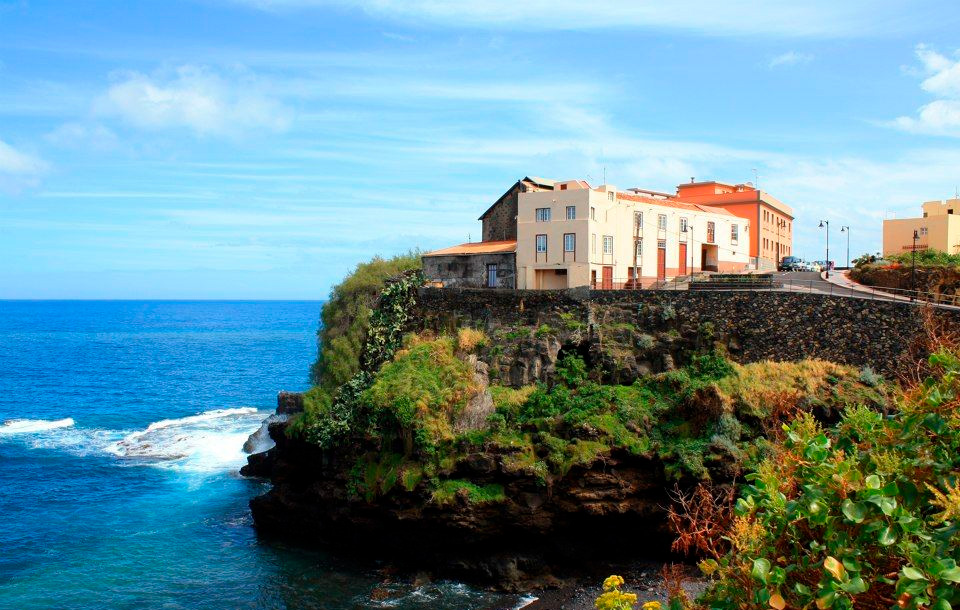
The beach of Nogales is a clear example of all these extremes of nature. Located on a green cliff, the black, somewhat coarse sandy beach glistens against the blue of the Atlantic Ocean. Travellers who want to submerge into the blue water, however, have to be careful: Since the beach is very open to the sea, there can be dangerous currents.
This is La Palma. An impressive combination of contrasts. Energy of life.
To completely enjoy the beauty of this place, we should definitely go down to the beach, over the cliffs (using stairs, do not worry). There are quite a few steps though, be warned. Those who prefer to remain up there (also travellers with limited mobility) can have a look down on Playa de Nogales from the viewpoint. It is amazing. Even if it is not the same.

Chapel of San Bartolomé and two viewpoints of the same name.
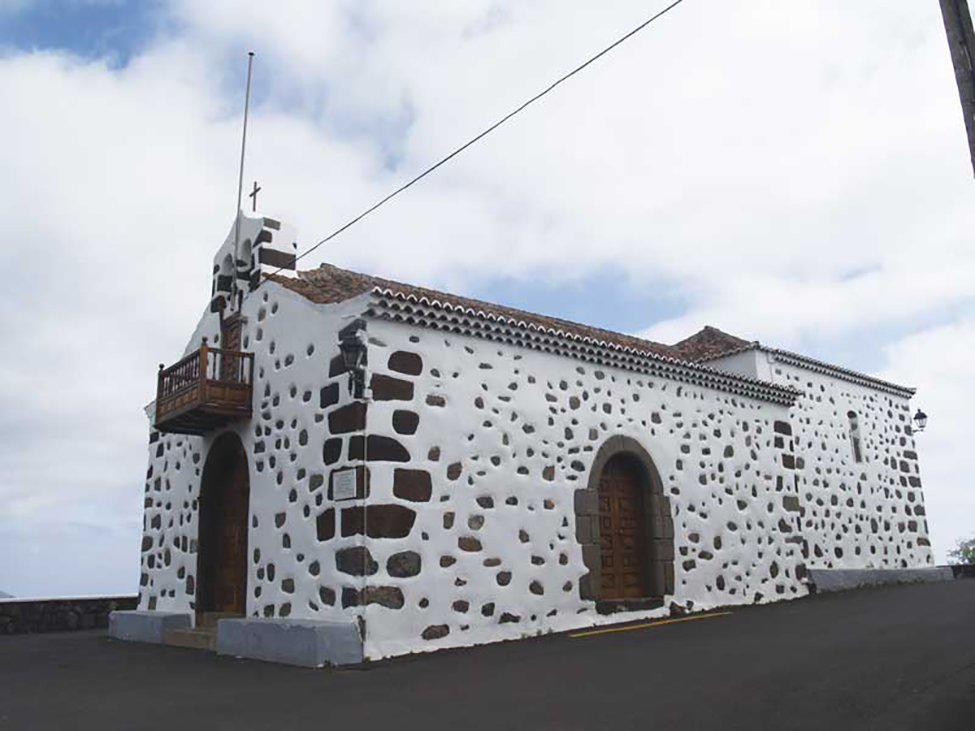
After this experience, we drive back to the LP-1, follow the road during 5 kilometres, and stop at a small chapel, the Ermita of San Bartololomé. The visit is quick because the chapel itself is small. It seems to have been taken out of a toy landscape: especially the facade reminds us - with all due respect - of a gingerbread house.
There is more to see here. A few meters further there is a viewpoint called "Mirador de San Bartolomé". Another 550 meters away, a second panoramic view awaits us, incidentally with the same name. The more known viewing platform, or the one with a more beautiful view, is the second one. There is a legend relating to this viewpoint. - What kind of legend? The one of the Lover.
Legend has it that a young shepherd wanted a peasant girl. Not only did she seem to be showing little interest, but also a certain malevolence. The girl asked the young man to submit to a test of courage in order to get rid of him. Standing on the edge of the cliff and leaning on a spear or a pole, he should jump three times around it into the void. The shepherd prayed to God before the first jump, then asked the Holy Virgin for her protection on the second jump. Twice he came back to stand on solid ground. The third jump, his beloved should bring him luck and protect him. But the young man in love fell into the depths...
Cubo de La Galga. Horizontal Rain.
One kilometre from the chapel, we are entering into the interior of the island: the heart of La Palma. We come from the northeast side. Here begins the green paradise, which we announced at the beginning.
Similar to the human body, the heart of La Palma is located a little to the left. You will distinguish three huge forest areas in the region: Las Nieves natural park, the Garafía pine forest and the Caldera de Taburiente national park. It is a journey to a world of its own; take your time to explore it. Do not miss a walk through Los Tilos, a linden forest that is part of this green universe.
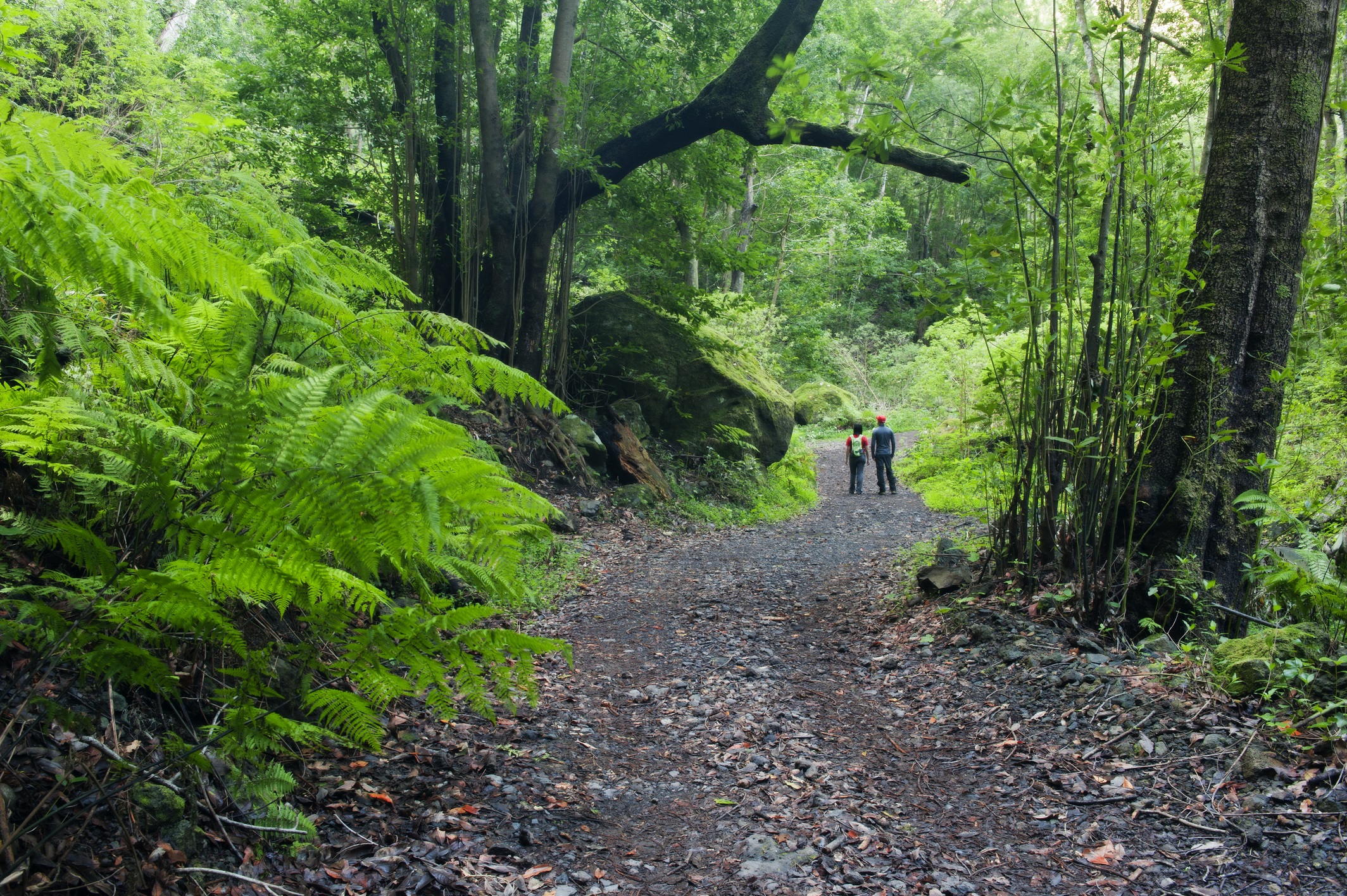
There are different hiking trails. One of the shortest trail is in Cubo de la Galga. It is a 2-kilometres-walk, which only requires basic equipment as comfortable clothing and sturdy shoes. The difficulty level of this hike is low. That does not mean that you will not walk open-mouthed in amazement. Because that is how it will be. In just over an hour you have time to admire fern fronds, gorges and waterfalls and even to listen to the strange chirping of birds. The hiker enters into a universe of flora and humidity. Pay close attention to this: Feel the humidity, which is also called "horizontal rain": the constant humidity, which makes the trees disappear in clouds and covers them with wetness. So much so that you can see the water dripping from the leaves. It is just unforgettable.
El Charco Azul, San Andrés and a Rum Distillery.
Back in the car, you would do well to shake your head a few times and take a deep breath in order to return to reality. Then we drive on to our next destination; it is just 8 kilometres away.
The "Charco Azul", the blue lake, is not a local variant of the "Charco Verde" on the island of Lanzarote. The blue lake actually consists of three natural pools, or water basins. Most bathers visit the largest basin. There is a smaller water basin and a third one, which is called "Charco de las Damas": It seems more like a volcanic cove and is an enchanted place. A perfect place to jump into the cool spring water; with the necessary security measures. Via a walking path, you could even reach a little beach.
It is worth noting that the Charco Azul was awarded the "Ecoplayas" flag: an award given to tourist areas for their sustainable management.
Whether you have taken a bath or not - it is and remains a place that enchants us.
We should definitely adapt our schedule to the opening hours of the Aldea Rum Distillery; it is not far from the Charco Azul, in direction of Puerto Espíndola. According to our information, on weekdays there is a guided tour of the distillery at 12 noon, which fits our schedule. Please check these visiting hours again beforehand.
All our island routes ideally include a wine tasting. In this occasion, we are including a rum distillery in our tour, as this one fits great into our route. Not to forget that a lot of sugar cane was cultivated in this area - which is processed into rum in the distillery.
Here we can make a short detour to the village of San Andrés (actually, it is a town), through which we have already passed on our way to the Charco Azul. It is one of the most popular villages in La Palma. It is really beautiful. Here you will find cobblestones, houses built in steps on a slope, palm trees, old mansions and bright facades. It is as being in a fairy tale. Having lunch in San Andrés, we can round off our visit. The culinary offer of the region bases on fresh fish and seafood, and on cheese. If you prefer meat, it is recommendable to continue the route until Barlovento. There is a steakhouse there, which has received a good rating in the press.
La Laguna and the viewpoint Barranco de los Poleos.
We have planned a little less for the afternoon. Our route guides us from viewpoint to viewpoint. The first one we will encounter is the viewpoint Barranco de los Poleos.
We return to the LP-1 and drive to Barlovento, from where we take the LP-109. After a few kilometres, there is the crater “La Laguna”on our left side, about one kilometre from the road. We should definitely stop there.
Around 50 years ago, a naturally existing basin of a crater was used to build a water reservoir. This reservoir nowadays covers more than 50% of the water supply on the island of La Palma. It is true that today’s sight, after human intervention, has little to do with what a crater looks like in its natural state. However, it is still impressive. So much water. On such an expanse of lake. There are campsites and recreational areas in the vicinity.
We take again the LP-109, and 10 kilometres further, reach the second viewpoint. Having so many viewpoints as La Palma - there are almost 20 in number - it is quite normal that one panoramic view cannot be as fascinating as the other one. The one presented here may not be the most beautiful of them all. Still, it is worth our attention. You cannot enjoy such a view every day.
Roque de Los Muchachos Observatory.
Once again, we have to return to the LP-1. During 25 kilometres, we drive around one of those green oases that we have described at the beginning of this route: the pine forest Pinar de Garafía. You should assess for yourself whether you have enough time to make another stop. If so, there is a culinary interesting place on our way. There is a small cheese dairy at the intersection of LP-1 and LP-109. Their specialty is a goat cheese called Marrero. 250 goats graze between the two gorges of the pine forest. We should not fail to mention the cheese Palmero, D.O. (Protected Designation of Origin).
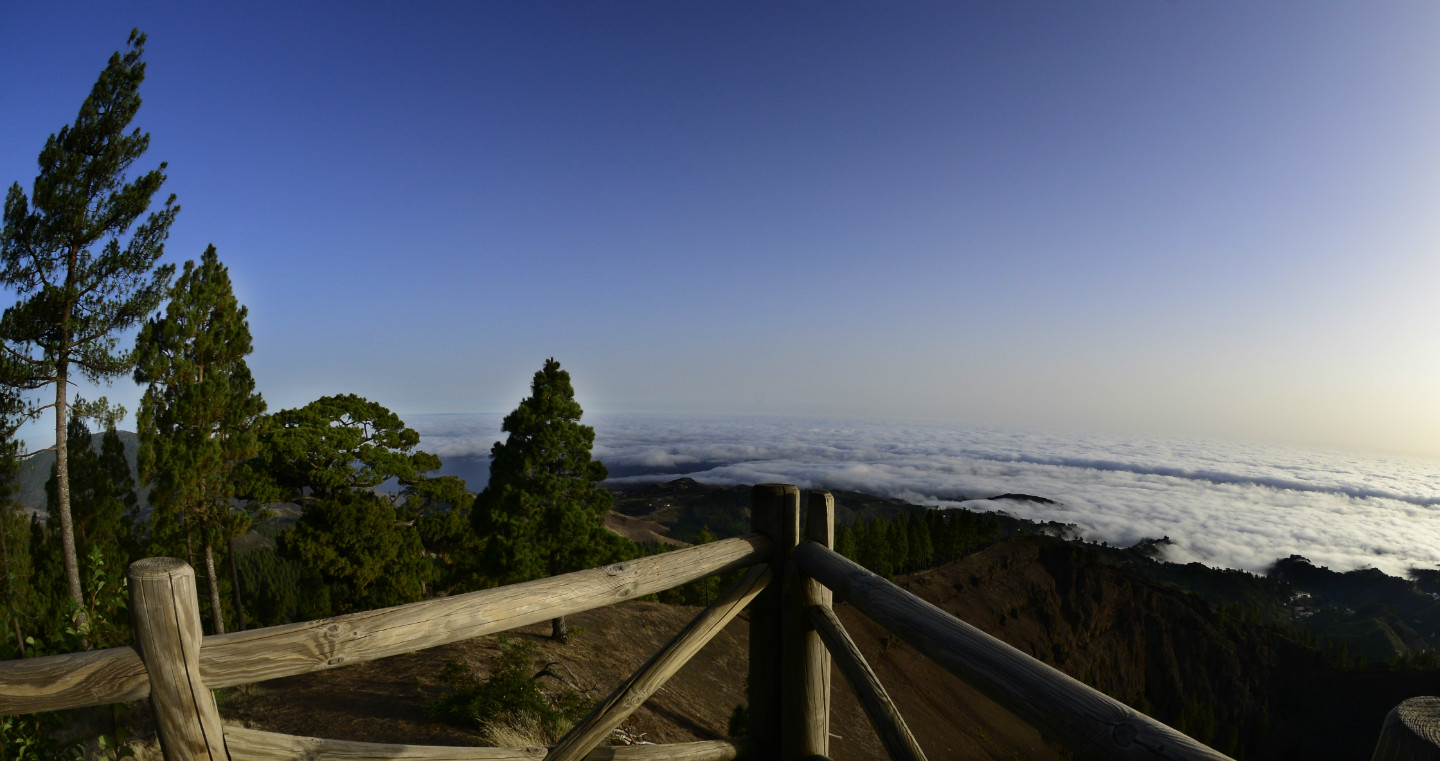
Towards the end of our journey, on the LP-4, a highlight and“the jewel” of the island awaits us. The viewpoint "El Mirador de Roque de los Muchachos" is clearly the viewpoint par excellence, which puts other panoramic views in the background. The viewing platform is the highest point of the island of La Palma, at 2,426 meters above sea level. There might exist only few places in the world from which the sky seems to be so close as from up here. It is not surprising that the astrophysical observatory is located here.
The view of the island is breath-taking. We feel amazed seeing the wide sky that touches the earth at the horizon and the clouds that gather like a sea between the mountain peaks. The word "vertigo" takes on a new meaning in the moment this sea of clouds opens up slightly revealing a view of the volcanic basin at a depth of 1,500 meters.
Indescribable. You have to see that.
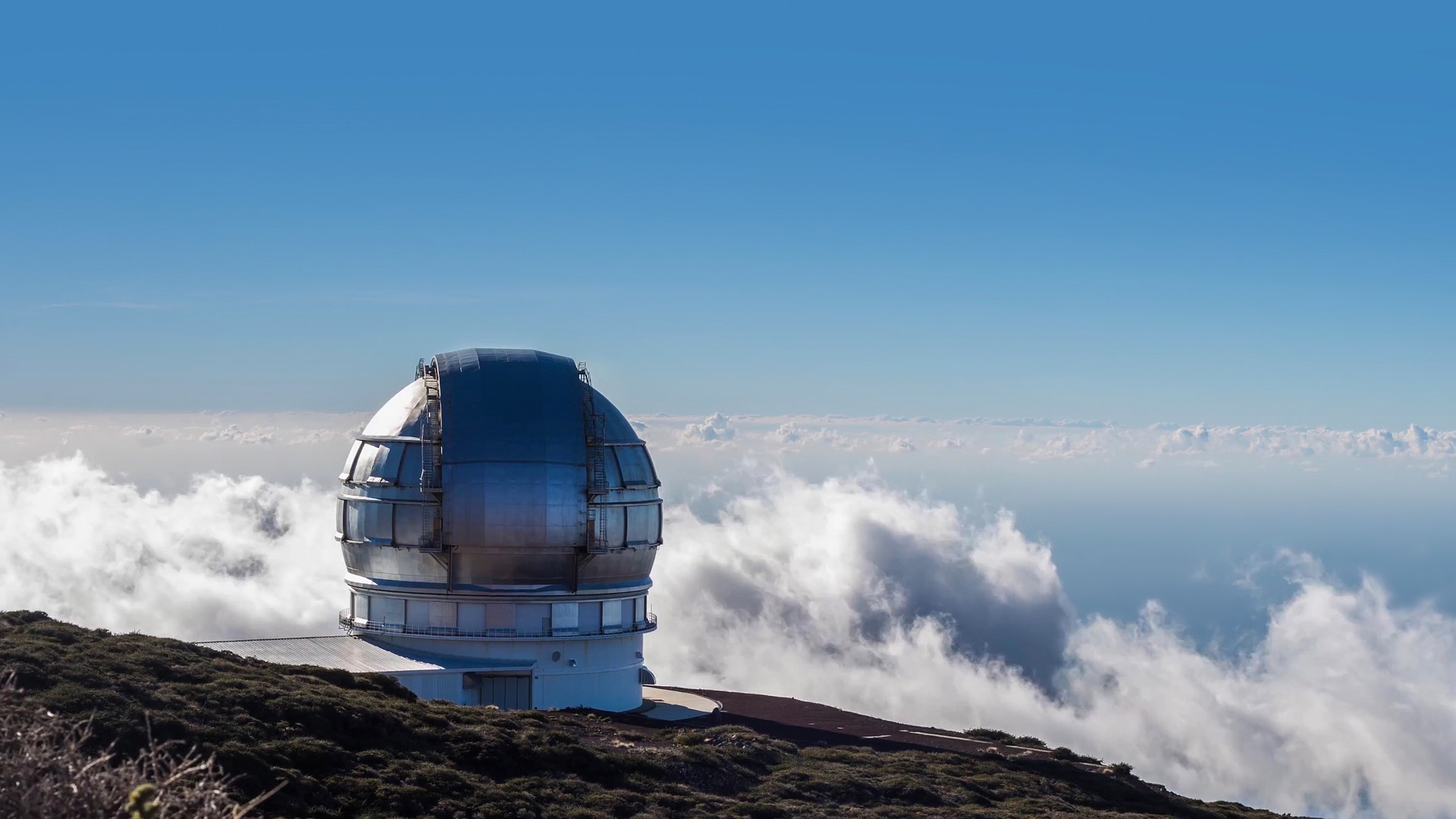
Viewpoint Los Andenes.
Not much remains to be said after visiting Roque de los Muchachos. Perhaps it is good to have one last stop to lower your adrenaline levels. On the way back to Santa Cruz, along the LP-4, we pass the viewpoint Los Andenes.
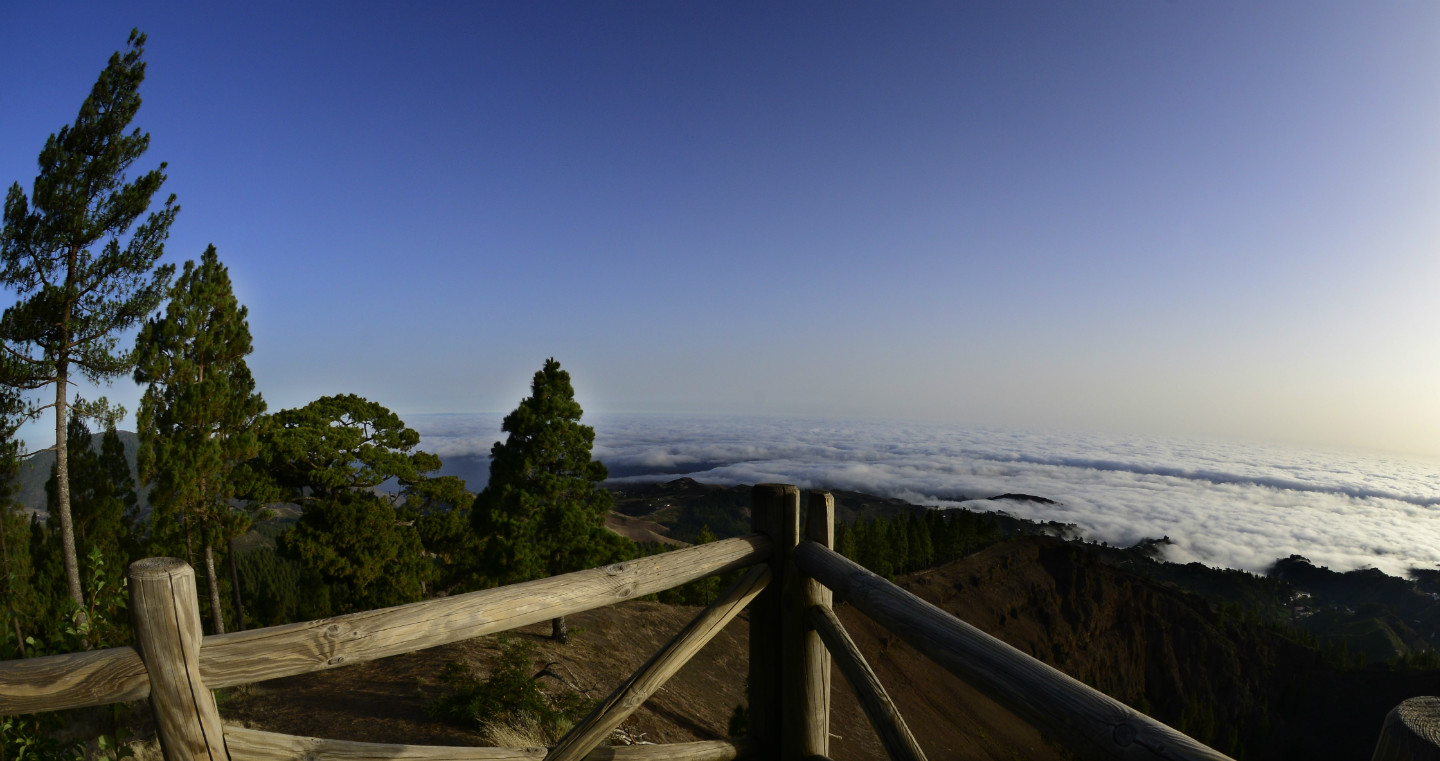
This panoramic view should not be underestimated, because from here you have an unobstructed view of the Caldera de Taburiente and the riverbed of the Angustias Gorge (“Barranco de las Angustias”). It is certainly worthwhile to come. We are not that sure whether your adrenaline levels will go down here.
Honestly, after that impressive day it would be strange if you did not dream about this island trip again.





Canary Islands

Last routes
Los Rodeos (Airport) - Los Gigantes Cliffs
We make it easy for you. And not only that. Truth be told, the first part of your route on Tenerife is going to be SO easy. And comfortable; without narrow serpentine roads (we will add some later on this route, so we won’t end up bored) It’s up to you whether you want to complete this beautiful route within one day or split it up in two days.
We would like to point out that it’s a challenging route if you drive it within one day.
Nevertheless, if you bring with you the energy and happiness for a longer excursion and if you arrive early in the morning on the island, you will enjoy this trip.
After arrival at Tenerife North Los Rodeos Airport, Rent a car on Tenerife with Hertz or Thrifty, if you haven’t already done so, and enjoy your vacation on the island from the first minute on.
The route has a total distance of approximately 170Km. One way. You then have several options for the return journey to the north of the island.
From the airport, we take the TF-24 road and start our tour.
From Arrecife to Timanfaya National Park. Southwest Route on Lanzarote
An island tour by car is great fun. Compared with the other islands of the Canary Archipelago Lanzarote is not too big and can easily be explored by car. The advantages are obvious: short distances and many possible stations to visit.
Today we would like to propose to you an easy and beautiful round trip by car. There are different points of departure. We can start from Arrecife or from Puerto del Carmen which has a wide range of hotel accommodations for travellers. Another option would be to start from the airport directly after your arrival at Lanzarote. The only requirement is to begin the excursion in the morning; without having to get up particularly early.
Assuming that you already got your Rent a Car in Lanzarte Airport with Hertz, Thrifty or with Dollar, we are glad to see that you are ready to explore and experience Lanzarote.
Our southwest route covers a distance of 80 km. The route is even shorter if you start from Puerto del Carmen or from the airport. However, we depart from Arrecife. From there we take the LZ-2 and then drive onto the LZ-501.
La Palma - Roque de los Muchachos (and the sky)
When visiting La Palma, you will immediately notice that you are entering a green paradise. It does not matter which itinerary you choose, you will witness the incomparable lush vegetation that stands out across the island. Laurel forests overgrow the entire island wherever possible: on slopes, in valleys and gorges.
The forests of La Palma are awesome. You should not only admire them with your eyes, but also experience them olfactorily. Smell them!
Above the island opens up a sky, which, thanks to its clarity, creates optimal conditions for astronomical observation. It is not surprising that Roque de los Muchachos houses the best astrophysical observatory in the northern hemisphere.
La Isla Bonita, the beautiful island. This name is justified. Finally, the world biosphere reserve is located on La Palma.
If you are planning a car route on La Palma, you have several options. The road network is star shaped from the capital. Similar to the road network in Mallorca.
For our today’s route, we decided to propose you a north route, along the LP-1. Our way back to Santa Cruz de La Palma we will then take the northeast highway LP-4. In total, we will run around 150 kilometres. That is not a very long stretch. We do not want to highlight any village specially on this route, telling you that this one is more worth visiting than any other is. Each village has its own charm. It is up to you to decide where to stop, and which places attract you most. Nevertheless, as always, there are many sights on our route, which we will propose to you. There is a lot to discover on La Palma.
So take your Rent a Car La Palma Airport at the Hertz or Thrifty counter. When renting the vehicle, it is worth taking a moment to choose the rental car you feel most comfortable with. We will spend a few hours in it. Then we start our route, and drive on the LP-1.